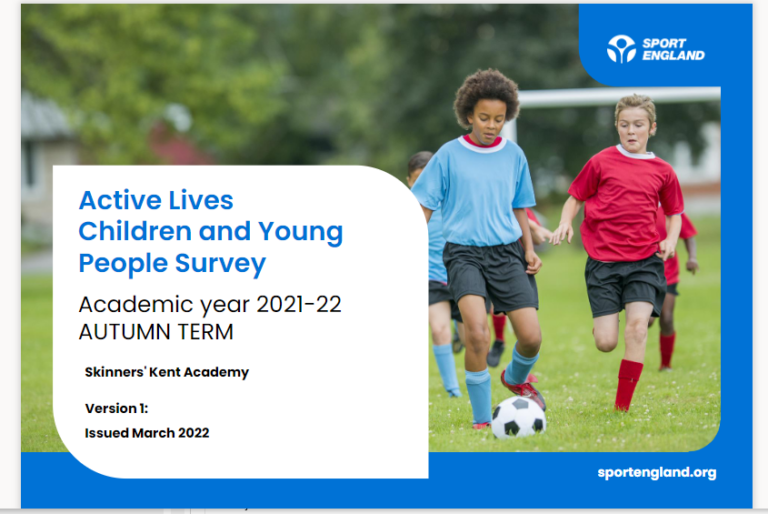
Sport England’s Active Lives Children and Young People survey measures the sport and physical activity levels of children and young people aged 5-16 years across England. Administered by schools, the survey also includes measures for wellbeing, attitudes towards sport and physical activity and volunteering. The findings are being used to shape future policy and investment in school sport.
Follow this link to access the Sport England Active Lives Information and resources
Active Lives Children and Young People 2024-25 Report
At a National Level:
The number of children and young people (CYP) taking part in physical activity is at its highest since Active Lives began in 2017-18. 49.1% of children and young people are achieving the recommended 60 minutes of sport or physically activity a day, this means that 3.6 million are benefitting from being active. However, there are still 50.9% of children and young people who are not active enough.
Inequalities still exist:
- Boys (52%) are more likely to be active than girls (46%), though the gender gap is narrowing.
- Children from the most affluent families are more active (58%) than those from the least affluent (45%).
- Black, Asian, and other ethnic minority children are less likely to be active, and the gap has widened.
- Children with a disability or long-term health condition are as likely to be active as those without.
Activities vary:
- Active play (64%), active travel (61%), and team sports (58%) are the most common activities.
- Active travel (walking, cycling, scootering) and gym/fitness activities show long-term growth, while team sports and swimming have plateaued post-pandemic.
- 73% of children can swim 25 metres unaided by the end of primary school, but this is down 3.5% since 2017-18.
Volunteering matters:
- 48% (2.3 million) of children and young people volunteered to support sport or physical activity in the past year.
- Volunteering rates are higher among younger children (Years 5–6) and have not fully recovered to pre-pandemic levels.
- Children from less affluent families and those with multiple characteristics of inequality are less likely to volunteer.
Wellbeing is important:
- Children with more positive attitudes towards physical activity are more likely to be active, happy, persistent, and trusting of peers.
- There is a strong positive association between physical activity and mental wellbeing, individual development (e.g., persistence), and social/community development.
- Happiness scores are higher for active children.
At a local level:
In Kent and Medway, 48% of children and young people are active, that’s over 30,000 more active children since 2017-18. However, there are still 52% of children and young people who are not active enough.
- Of the districts, Folkestone & Hythe saw the greatest increase in the number of active CYP at 3.7%, Medway saw the greatest decrease in active CYP of 11.3% (significant).
- Of the districts, Tunbridge Wells saw the greatest decrease in number of less active CYP at 2.7% (not significant), Medway saw the greatest increase in less active CYP at 13.5% (significant).
We’re currently working behind the scenes to understand the data behind the numbers. If you would like to explore trends over time, specific activities, audiences and places, please take a look at Sport England’s Active Lives Online Tool.
Taking part in the Active Lives Survey
Active Kent & Medway is managing the survey in Kent and Medway on behalf of Sport England with the support of School Games Organisers. Ipsos MORI, a specialist research agency, are processing the survey and abide by the Market Research Code of Conduct, which includes ensuring the survey is confidential and anonymous.
Selected Schools
Schools are randomly selected to take part but any school, if not selected in a school year, can choose to take part by opting-in. If your school is selected you will be contacted and, subject to completing a minimum number of surveys, you will receive a bespoke report on the findings plus equipment vouchers to the value of at least £100. Those schools who take part will also receive a Healthy Schools Rating, providing they complete the minimum number of surveys including a teacher survey.
Opt-In Schools
Schools who are not randomly selected can choose to take part and, subject to them completing a minimum number of surveys, will receive a free report on the findings. Please contact Karen Johnston at karen.johnston2@kent.gov.uk if you’d like to opt-in to take the survey.
All the latest information on taking part, as well as supporting resources for schools can be found on the Sport England website. This includes details on the process, survey questions, example school reports, template communications for parents, information for the students and teachers who are taking part as well as the privacy policy.
Follow this link for Sport England’s Active Lives CYP pages
If you have any questions about the Active Lives Survey, please contact Karen Johnston at karen.johnston2@kent.gov.uk

Karen Johnston
Active Lives CYP Survey Assistant Officer
- Tel: 03000 410799
- Email: karen.johnston2@kent.gov.uk
Part time - working days: Tuesday, Wednesday and Thursday
"At my happiest when I am out and about, exploring new places, walking the dog, taking beach strolls or supporting my teenagers with their football and swimming."