
Process and Learning Reflections – Thanet and Gravesham (October 2025)
Working in Place
In November 2023, Sport England announced investment under the Uniting the Movement Strategy into place, emphasising hyperlocal co-created solutions to tackle inactivity and inequalities in areas identified as having the greatest need.
This place-based approach puts communities at the heart of change with local organisations and residents working together to create the outcomes and opportunities they want to see.
In Kent, Thanet, Gravesham, Medway and Swale have been identified for investment. This report focuses on Thanet and Gravesham and reflects on progress so far, explores what changes have taken place and why, and identifies emerging opportunities and next steps.
Place Methodology
Active Kent & Medway’s approach is rooted in social constructivism, recognising that “place matters” and that local social, cultural and environmental contexts shape people’s opportunities to be active. This enables a deeper understanding of how communities experience barriers and enablers to activity, ensuring insight and evaluation capture lived experience and the meanings people attach to being active.
Our Places
Both Thanet and Gravesham have embraced the principles of co-design, equity, and shared accountability, but their approaches have differed in emphasis and execution. Thanet has prioritised direct delivery and youth engagement through participatory programming, while Gravesham has focused on strategic planning, governance development, and stakeholder alignment. These differences reflect the unique contexts and readiness levels of each area and offer valuable insights for future work.
Thanet
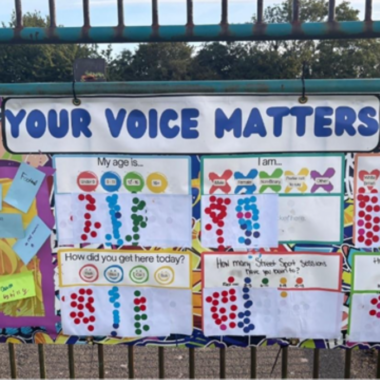
In Thanet, we activated underused public spaces through inclusive, youth‑centred Street Sport Sessions co‑designed with a Youth Advisory Group of 11–15‑year‑olds. Using creative, participatory methods such as sticker boards and youth‑led interviews, the initiative both gathered meaningful insights and empowered young people by giving them ownership in the process.
The approach demonstrated how relational engagement, trust building and adaptive learning can help youth participation. Deliverers, who shared lived experiences with participants created safe and welcoming environments that encouraged consistent engagement and sense of belonging.
Despite structural barriers such as poor infrastructure, dispersal orders, and the underrepresentation of some groups, the sessions successfully fostered community cohesion and relational trust, laying important foundations for longer‑term system change.
“I think we need to ask the kids what they want. So, if they want dodgeball or any other sport that they like, then we can bring it to the park. It’s not just about what we think they’ll enjoy, it’s about actually asking them and letting them shape it. That way, they feel like it’s theirs.”
Youth Advisory Member
Gravesham
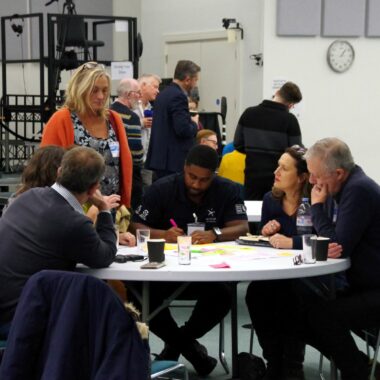
In Gravesham, the work has centred on building strong and inclusive governance to help shape strategic direction. An ongoing needs assessment is engaging local stakeholders to surface insights, understand local priorities, and identify opportunities for synergy. This work will shape two Test and Learn projects in Westcourt and Northfleet North.
Gravesham’s partnership environment is moving toward more cross‑sector collaboration. Although current involvement is primarily from local government and public health, there is recognition that faith groups, community organisations, and physical activity providers must play a stronger role for a fully place-based model. The needs assessment is helping deepen engagement across these sectors and clarifying shared priorities.
To build sustainable, community-rooted capacity, Gravesham has appointed a Community Connector through The Grand Healthy Living Centre. Recruiting locally ensures lived experience and cultural insight are embedded into the work. The Community Connector will amplify underrepresented voices, support co‑creation, and help shape and deliver the Test and Learn projects in ways that reflect local realities.
Our Way Forward
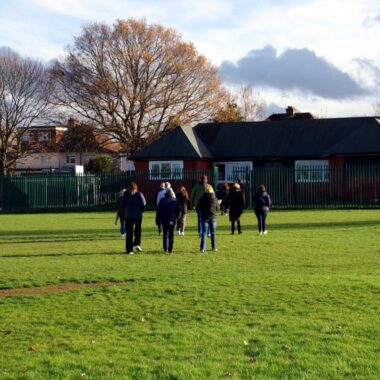
The Place Partnerships programme in Thanet and Gravesham is entering a new phase focused on embedding learning, strengthening local capacity and formalising governance for long‑term system change. Recent recruitment, including Place Programme Managers, Monitoring, Insight and Learning Officer and Community Connectors has enhanced coordination and deepened community-led delivery.
Targeted training, informed by the Thanet Street Sports Test and Learn, will build facilitator capability in key areas such as behavioural management, multi‑sport delivery, and inclusive engagement. Stakeholder groups continue to drive strategic alignment while governance models are being co‑designed to ensure sustainability.
Systems Leadership Training will further support local decision making and political engagement. Alongside this, significant capital investment, most notably £2 million for Gravesham’s Cascades redevelopment will strengthen local infrastructure. An iterative, participatory Theory of Change is being developed to guide future evaluation and track long‑term system impact.
Final Thoughts
These Process and Learning reflections highlight the importance of contextual responsiveness in place-based working. There is no one-size-fits-all model, rather, success depends on tailoring strategies to local conditions, capacities, and relationships.
- Thanet’s emphasis on relational engagement and participatory delivery offers a model for rapid activation and youth empowerment.
- Gravesham’s focus on governance and strategic alignment provides a blueprint for sustainable system change and cross-sector collaboration.
Moving forward, this work seeks to integrate the strengths of both approaches. This cross-pollination of insights will enable the development of a hybrid model that balances immediate impact with long-term sustainability.
Full Process and Learning Report (October 2025)
Follow this link to read the full Process and Learning Report (Download PDF)
If you require the full report in an alternative format, please email activekent@kent.gov.uk
If you’d like to discuss the findings of the report, please contact Alexia Tam, our Insight, Evaluation and Learning Officer on 03000 415879 or email: alexia.tam@kent.gov.uk