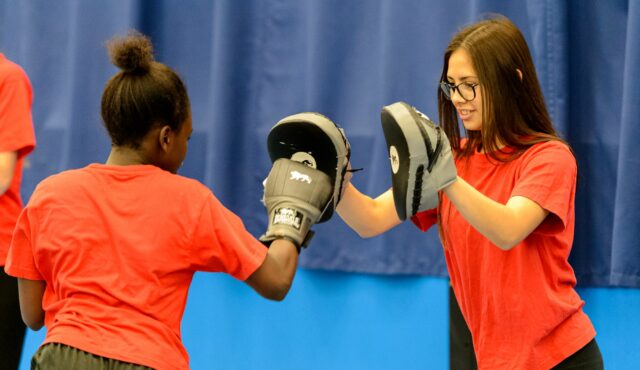
 A little while ago, a parent came into our club and said something that has stayed with me: “I loved the story about one of your lads on your website. It made me think this might be the club for my son to try. We’ve tried lots of other clubs, and he was never really welcome. He didn’t fit.”
His son has now been with us for several months and is absolutely thriving. The dad is delighted and grateful that we’d put the story online for him to find, because it gave his son a starting point that he hadn’t found anywhere else.
That family made their decision before they ever walked through our door. And that’s the part clubs often miss.
For many neurodivergent children and their parents, the hardest part isn’t the activity. It’s the ‘not knowing’.
- Will the coach understand?
- What happens if my child gets overwhelmed?
- Will we be the family that’s “too much”?
A lot of these decisions are made before anyone arrives at the club, based on what a club seems to be: the tone, the website, the first reply to an email. The good news is that being a welcoming club isn’t a feeling you have to hope comes across. It’s something that you can quietly set up and show.
Show that you’ve thought about it
 Neurodivergent families are used to having to explain, justify, and advocate everywhere they go. The clubs that stand out are the ones where a family can tell, without asking, that someone has already thought about them.
That might be a single line on your website or sign-up form. Something like ‘We welcome neurodivergent children and young people, and we’re happy to chat about what helps your child take part.’
It costs nothing, and as that dad showed us, it can be the very reason a family decides to try you at all.
Ask before, not during
A short, friendly question at sign-up like: “Is there anything that would help your child feel comfortable and confident with us?” let’s families share what matters early, rather than waiting for something to go wrong in front of the group. It also means your coaches aren’t caught off guard.
This isn’t about diagnosis or labels. It’s about understanding and small, practical adjustments. A parent knows their child better than any form ever will.
Have a name, not just a policy
 Committees are great at writing inclusion statements. But a statement on its own doesn’t reassure anyone. A person does. A named, friendly point of contact, or simply a coach happy to have a quiet chat before the first session, gives families somewhere to turn. It signals that support here is real, not just written down.
A light readiness check
You don’t need a full review to get a sense of where you are. Just notice how many of these your club could honestly say yes to:
- We say somewhere visible that neurodivergent members are welcome.
- We ask new members if anything would help them take part.
- There’s a named person who a family can talk to before they start.
- Our coaches know small adjustments are encouraged, not ‘extra’.
- A child can step back briefly without it being a problem.
- Inclusion is something we’ve actually talked about as a committee, not just assumed.
If you can tick some of these, you’re already further along than you think. If you can’t tick many yet, that’s simply the next small step, not a failing.
None of this requires clinical expertise or rewriting your programme. It’s the same principle as before: understanding, flexibility, and small practical changes that help everyone feel safer and more able to take part. If you only do one thing, start with the welcome line on your sign-up form. You never know which family is reading it.
About the author
Tamzin Reid is a high‑performance sports coach and British Gymnastics tutor and assessor, with over 30 years’ coaching experience. She is neurodivergent (dyslexic and ADHD) and brings both lived experience and professional insight to her work supporting coaches to create more inclusive, understanding sporting environments.
Supporting Clubs and Coaches
Active Kent & Medway is committed to supporting clubs through short, accessible awareness sessions based on lived experience and practical coaching strategies. These can act as a starting point, with clearer pathways available for clubs who want to deepen their learning. If you’re interested in these awareness sessions, please contact Jimmy or Rachel, your local Sport Welfare Officers via email: sportwelfare@kent.gov.uk