
Process and Learning Reflections (April 2026)
Working in Place
 In November 2023, Sport England announced investment under the Uniting the Movement Strategy into place partnerships, encouraging more local, co‑created ways of tackling inactivity and inequality in areas facing the greatest challenges. This approach puts communities at the centre, with local organisations and residents shaping the changes they want to see.
Across Kent, Thanet, Gravesham, Medway and Swale have been identified for place partnerships investment. This report reflects on learning between October 2025 and April 2026. It looks at what is beginning to change across these four places, why those changes are happening, and what that means for the next phase of place‑based work. The focus is less on what has been delivered, and more on how local systems are starting to work differently over time.
“Place-based approach is definitely the way forward… it’s all in pride as well, where you live.” Delivery Partner
Place Methodology
Active Kent & Medway’s place-based approach focuses on working with communities to understand what works in each local context, valuing data, professional insight, and lived experience equally. It uses Critical Realist Evaluation to explore why outcomes differ across areas, with lived experience providing key insight into real-world barriers. Test and Learns are used to explore and learn what supports change, rather than prove solutions early, while Monitoring, Evaluation and Learning enable shared reflection and helps inform decisions as the work evolves.
Thanet, Gravesham, Medway and Swale all work to shared principles of co‑design, fairness and learning, while being at different stages of readiness and confidence.
Working Together in Thanet
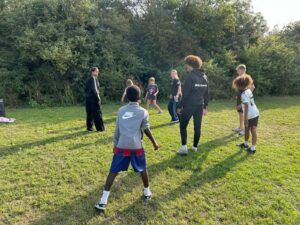 Thanet illustrates how the place partnership is moving from individual projects towards more joined‑up system learning and collaboration. Since October 2025, early Test and Learn activity and leadership training have helped partners build a shared understanding of the structural, social and psychological factors shaping physical activity and wellbeing. Data is now used alongside lived experience rather than as a standalone measure, supporting more honest conversations about inequality, access, safety and trust.
Governance has intentionally remained developmental, prioritising relationships, shared language and clarity of purpose over rapid formalisation, and signalling growing confidence in place‑based ways of working. Test & Learn activity with young people and older adults living with frailty has been central to this shift. Together, these projects show that participation is shaped by context, belonging and trust rather than motivation alone, and that confidence and independence emerge through supportive, consistent relationships.
Learning from these projects is increasingly influencing wider system behaviour, including infrastructure investment, workforce thinking, and cross‑sector collaboration with partners such as libraries and health services. While population‑level outcomes are still emerging, Thanet is showing early signs of system change through stronger partnerships, shared responsibility, and a growing culture that values relational working, lived experience and continuous learning as the foundations for reducing inequalities over time.
Building a Better Gravesham
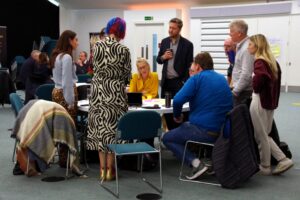 Gravesham has focused on the transition from planning and coordination into applied place‑based practice. Over the past six months, system learning has matured as partners have developed shared priorities, increased leadership capability, and stronger links between strategic intent and community‑level action. Leadership training has played a central role, helping partners engage with complexity, challenge assumptions, and use data alongside lived experience to better understand inequalities. Data is now used to support conversations about how factors such as housing density, safety, transport, culture, and trust shape participation.
This learning has directly informed Test and Learn activity and system behaviour. Projects in Westcourt and Northfleet were intentionally designed as learning‑led interventions, using participatory and narrative‑based approaches to understand how people experience space, activity, and opportunity before scaling delivery. Alongside this, governance and investment decisions have become more aligned with place‑based insight, including links to the Local Plan, targeted funding decisions, and infrastructure investment.
While challenges remain, such as workforce fragility, the partnership is increasingly confident in translating learning into action. Overall, Gravesham is demonstrating a shift towards collective ownership, applied learning, and a system culture that prioritises inclusion, adaptation, and shared responsibility for reducing inequalities.
Connecting Health and Community in Medway
 Medway highlights a deliberately paced and relationship‑led approach to place‑based working. Progress in Medway has focused less on rapid delivery and more on establishing the conditions needed for sustainable system change. This reflects both the complexity of the local context, shaped by NHS restructuring, multiple partnerships, varied VCSE capacity and intentional learning.
Early activity has prioritised trust, clarity and alignment, most notably through the formation of a Core Working Group. This space has functioned primarily as a learning and sense‑making forum, enabling system mapping, shared understanding, and honest reflection before coordinated action. Partnership development and community‑led recruitment have been central to this phase. The recruitment of Community Connectors has strengthened links between strategic partners and lived experience, reinforcing learning about the relational nature of system change.
Rather than launching new delivery prematurely, Medway’s Test and Learn activity has focused on aligning with existing initiatives to explore new ways of connecting, framing and amplifying impact. While tangible delivery outcomes remain emergent, there is growing confidence among partners in valuing learning as legitimate system work. Overall, Medway is moving from engagement towards intentional design, laying strong foundations for future place‑based activity that is better aligned, contextually grounded, and less fragmented.
Linking Action Across Swale
 Swale is in an early but intentional phase of place‑based development, focused on building the foundations for sustainable system change rather than rapid delivery. Since October 2025, Swale has progressed from exploratory engagement to more formal partnership infrastructure, including the establishment of a Place Partnership Board and Delivery Group. Learning from Thanet and Gravesham has shaped a cautious, phased approach to governance that prioritises relationship‑building, shared purpose and collective sense‑making.
In a context marked by NHS uncertainty, rural–urban variation, and strong local identities, particularly in Sittingbourne and the Isle of Sheppey, partners have recognised the need for governance and leadership models that are flexible, locally sensitive, and resilient to wider system change. At this stage, impact in Swale is best understood as capacity‑building and process‑oriented. Early progress is visible in improved coordination, greater alignment of existing investment such as Pride in Place funding, and a shift in partner thinking from organisational activity toward collective system outcomes. Community‑led recruitment has been identified as a key enabler, Community Connectors will strengthen local reach and relational capacity.
While delivery outcomes remain emergent, Swale is deliberately laying the infrastructure needed to translate learning into action, positioning the partnership to move into Test and Learn activity with greater clarity, confidence, and reduced risk.
Our Way Forward
 Looking ahead, we will focus less on introducing new activity and more on embedding ways of working that have shown early promise. Priorities across all places include strengthening governance so it can hold long‑term ambition, learning and accountability, while remaining inclusive, flexible and connected to decision‑making.
Leadership development will continue to be a key lever, building on learning from Thanet and Gravesham to support experiential learning, cross‑sector collaboration and political engagement.
Test and Learn activity will remain central, increasingly used as a system learning tool rather than delivery pilots, supported by strong Monitoring, Evaluation and Learning to evidence system change over time. Overall, the programme’s direction is defined by commitment to process, learning and equity, with the foundations creating the conditions for meaningful, long‑term system change.
Final Thoughts
This Process and Learning Reflections Report captures a period of consolidation in Active Kent & Medway’s place‑based work, showing clear progress towards the conditions needed for long‑term system change across Thanet, Gravesham, Medway and Swale. While population‑level outcomes remain a longer‑term ambition, there is strong evidence of system shifts in how inequality is understood and addressed, with participation increasingly seen as shaped by context, trust, belonging and access rather than individual motivation.
Lived experience is being treated as system intelligence, Monitoring, Evaluation and Learning is enabling deeper insight, and early‑stage work in Medway and Swale reinforces the importance of readiness, pace and place sensitivity. Together, this learning positions the partnership well to strengthen coherence, deepen impact and sustain change over time.
Full Process and Learning Report (April 2026)
Follow this link to read the full Process and Learning Report (Download PDF)
If you require the full report in an alternative format, please email activekent@kent.gov.uk
If you’d like to discuss the findings of this report, please contact Alexia Tam, our Insight, Evaluation and Learning Officer on 03000 415879 or email: alexia.tam@kent.gov.uk