 International Women’s Day 2026 is an opportunity to acknowledge and celebrate the achievements and contributions of women and girls around the world. For me it’s a chance to reflect on my commitment to gender parity and my ongoing development as an ally.
In my final year as an undergraduate, I chose ‘Women’s Sport’ as my dissertation topic. At the time, my choice wasn’t driven by a concern for women’s sport, or the challenges female athletes face due to their gender; I picked it because I believed it would be an easy essay to write, given all the controversy and available literature.
My ignorance of the subject was quickly exposed. As I researched and started interviews, I began to question:
- How was women’s football banned in the UK for 51 years?
- Why must some female athletes work a second job to survive?
- Why is research on women’s sport science so far behind?
My questions could go on and on. My ignorance and lack of awareness was not intentional. Although these issues sparked my interest, my commitment to taking action came when I learned about Girls In Sport, a charity working in Sierra Leone delivering activities and sporting opportunities for young girls.
In the western world, there are still undoubtedly extremely large disparities in gender equity. But if you take those western issues, and move the context to Sub-Saharan Africa, you then see the full extent of gender disparity that goes far beyond sport. After finishing my dissertation, I became a writer for Girls in Sport, writing articles not on pay gaps and media representation, but Female Genital Mutilation, child marriage and using sport as a way of escaping abuse and protecting vulnerable girls.
 This writing inspired me to focus much of my master’s degree on women’s sport. This time I focused on ‘Male Allyship’ attempting to understand the role men can play in advancing women’s sport. Exploring this topic allowed me to contribute to critically under-explored research and improve my own understanding of the subject before going on to work in the sports sector.
I’ve met so many positive and powerful voices along the way. Without them, I would probably still be on the wrong side of the arguments around gender equity and equality. I would probably still believe that sporting misogynistic jokes are okay. I would probably still believe that the gender pay gap doesn’t exist, and I would probably still believe that men do not play a part in the fight for equality.
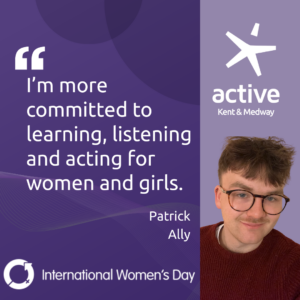
My journey has just begun, but I’m now even more committed to learning, listening and acting for women and girls.
Published: March 2026